




There was a time when “mobile gaming” meant tapping away at a tiny screen for a few minutes while waiting for the bus. The games you’d find on your phone were simple pastimes that didn’t take much to run or play, and for good reason. Nobody expected their phones to compete with the likes of gaming consoles. Today, that idea seems ancient.
Mobile gaming has become complex and elevated, opening up a world of esports, cross-platform gameplay, and genre-bending titles. The internet is one of the main causes of this popularity and expansion. Over the years, the journey from a pixelated snake on a screen to high-quality games like Genshin Impact is probably one of the wildest transformations in gaming history.
So, today, we thought we’d take a trip down memory lane and look back at some of the video game titles that shaped the world of mobile gaming. Now, this isn't a ranking of the “best” mobile games ever, but rather a nostalgic snapshot of how games have changed the industry. Can you remember how many of these you played?
Snake (1997): When Phones Turned Into Gaming Devices

We can’t talk about mobile gaming history without mentioning the legendary Snake game on the Nokia brick. Before the age of smartphones, Snake was pre-installed on countless Nokia phones and formed the basis of many people’s first introduction to mobile gaming.
While the first ever game released for a mobile phone was Tetris for the Hagenuk MT-2000, mobile games didn’t really gain traction until Snake was released in 1997 for the Nokia 6610. The game itself was quite simple: move a growing line around the screen, eat objects, and try not to crash into yourself. However, its simplicity is not what made it an important milestone.
Snake showed the world that people actually wanted to play games on their phones. Almost anyone could understand it within seconds, and because it came built into the phone, there was no downloading, account management, or complicated setup to deal with. It was arguably the true starting point of the mobile gaming timeline.
Angry Birds (2009): When Mobile Games Became Pop Culture

In the late 2000s, the touchscreen phone made its appearance, and in December 2009, Rovio Entertainment released Angry Birds on the App Store. This physics-based game involved launching cartoonish birds at structures occupied by pigs that have stolen their eggs.
Rather than trying to recreate traditional controller-based gaming, Angry Birds was designed specifically for touchscreens. Pull back the slingshot, aim, and release. The controls were intuitive, satisfying, and instantly understandable, which is why the game’s popularity skyrocketed.
Angry Birds became part of pop culture, spawning merchandise, toys, movies, sequels, and countless spin-offs. The game was cheap, addictive, and extremely fun. Its biggest legacy was proving that a mobile game could become a globally recognizable entertainment franchise.
Temple Run & Subway Surfers (2011-2012): Defining the Smartphone-First Game Design

Around this time, mobile games were being adapted to shorter attention spans, relying on quick, repeatable smartphone gameplay sessions that could fit into your day-to-day life. Temple Run and Subway Surfers helped establish one of mobile gaming's most addictive formulas: the endless runner. Swipe to turn, jump, or slide. Collect coins. Beat your previous score, then try again.
The games were perfect for smartphones because you could play for 30 seconds or 30 minutes. And when you inevitably failed, there was always the thought: one more run. Temple Run helped popularize the 3D endless-runner formula, while Subway Surfers became one of the longest-running successes in mobile gaming. Together, they showed that mobile games didn't need to imitate console games. They could build entirely around the strengths of smartphones.
Candy Crush Saga (2012): Mobile Gaming Goes Mainstream

With the rise of social media platforms, suddenly mobile gaming became much more accessible and popular. In 2012, Candy Crush Saga was released and instantly became a hit.
The simple mechanics of the game made it easy to play and easier to get addicted to. Its match-three mechanics were easy to understand, while progression, social features, and free-to-play accessibility gave players plenty of reasons to keep coming back.
Suddenly, mobile gaming was something everyone could enjoy, even your grandma or coworker. And yes, there are probably more parents and grandparents out there playing Candy Crush on their REDMAGIC phones than you'd expect. But the general message was clear: mobile gaming had become an enormous mainstream gaming market.
Clash of Clans (2012): Building a Mobile Community

Now, mobile games began to pick up the pace for gamers who wanted something to build up on and continue to play. Enter Clash of Clans. Suddenly, mobile games weren’t just disposable time-killers, and you could actually create something to come back to each day.
With Clash of Clans, you could build a village, upgrade your defenses, wait for construction, join clans, or start a battle. In particular, the clan system of the game transformed the solo phone game experience into a social event. Players weren't just progressing through a game; they were becoming part of communities.
Pokémon GO (2016): That Time When Everyone Went Outside

Video games get a bad rep for keeping kids from playing outside like in the good old days. So, you can imagine the surprise of many parents when kids suddenly wanted to take to the streets in 2016 to capture exotic creatures, at least on their phones. That’s right, Pokémon Go was one of the most significant milestones in mobile gaming history.
Using the AR and geo-location technology embedded in smartphones, the game evolved into something spectacular: a real-life playing field with a globally recognized IP. Suddenly, people were combing the streets, visiting landmarks, and furiously swiping to catch the elusive Lapras or Dratini in front of them.
The game had record-breaking downloads, with both its initial iOS and Android releases seeing over 100 million players worldwide within a month of release. It became a massive cultural moment and a reminder that smartphones weren't simply miniature consoles. Their cameras, GPS, and connectivity could create entirely new types of gaming experiences.
PUBG Mobile (2018): Console-Scale Gaming Comes to Phones

The era of PUBG Mobile was another major turning point in mobile gaming history. Suddenly, a 100-player Battle Royale, huge maps, vehicles, loot, and competitive multiplayer gameplay were available on a device that could fit into your pocket.
More than that, the arrival of PUBG Mobile dramatically raised expectations for what mobile hardware needed to deliver. Players wanted better processors, larger batteries, improved cooling, higher refresh rates, and more responsive controls. This is also the point where dedicated gaming phones began making more sense.
REDMAGIC launched as a gaming brand in 2018, in the midst of this growing demand and as an accessible, premium, and intuitive solution to advanced mobile gaming. While the game pushed the hardware forward, the hardware, in turn, helped players get more from the game. Suddenly, mobile was no longer the lightweight version of gaming.
Call of Duty: Mobile (2019): Competitive FPS Mobile Gaming Levels Up

As more developers recognized the traction of mobile gaming, more titles began to flood the mobile gaming industry. However, bringing Call of Duty to the smartphone screen was never going to be about simply shrinking the console experience. Instead, Call of Duty: Mobile went a step further to establish itself as a force to be reckoned with, delivering fast multiplayer matches, familiar maps, ranked play, and Battle Royales, which all helped to legitimize competitive FPS gaming on touchscreens.
The success of the game also helped to strengthen its position as a benchmark for mobile esports and competitive gaming, showcasing skills, agility, and tactical training that made the pros stand out. The game also demonstrated how high refresh rates, responsive touchscreens, shoulder triggers, effective cooling, and low-latency audio were crucial elements for serious players, a message that REDMAGIC used to build an empire of innovative gaming devices around. In terms of history, Call of Duty: Mobile showed that competitive shooters could feel at home on a phone.
Genshin Impact (2020): The “Wait... This Runs on a Phone?” Moment

We’ve all been there: you’re scrolling through the app store and suddenly see a major AAA game that’s compatible with your phone? That’s right, we’ve hit another turning point milestone in mobile gaming. The release of Genshin Impact changed the way we saw smartphones. Suddenly, this massive game could run seamlessly on your small screen.
With huge open-world designs, detailed visuals, and cross-platform support, Genshin Impact on mobile challenged everything we thought we knew about mobile gaming. Now, people weren't just asking whether a phone could run a game; they were asking how well it could run, whether it would throttle, or what happens after 30 minutes.
The focus on sustained performance also helped to reinforce the importance of cooling technology for gaming hardware and established the era of visually ambitious anime-style and gacha games that dominates much of mobile gaming today.
Honorable Mentions: Games That Left Their Mark
Now, some mobile games also changed the trajectory of the industry in their own way, either from their popularity, cultural significance, or ability to improve the way we approach gameplay today. Each of these games pulled its weight in establishing mobile gaming as a formidable gaming alternative.
Fruit Ninja: This simple yet addictive game was mostly sought out by younger generations but also proved that the touchscreen itself could be the controller.
Flappy Bird: With its sudden popularity, the game showcased how a ridiculously simple game could become a global phenomenon almost overnight.
Plants vs. Zombies: One of the defining early smartphone and tablet games.
Minecraft: Pocket Edition: Built on the shoulders of a giant in the industry, this game showed how easy it could be to keep a massive sandbox world in your pocket.
Mobile Legends: Bang Bang: This game helped to establish mobile MOBAs and a huge esports ecosystem, particularly across Southeast Asia.
Honor of Kings: Easily became one of the most influential titles in China's mobile gaming and competitive gaming ecosystem.
Fortnite: Brought major cross-platform gaming and live-service expectations to mobile.
Among Us: Yet another cultural moment that took grip during lockdown and showed how easily mobile gaming could sit alongside PC in a viral space.
Roblox: Turned phones and tablets into gateways to an enormous user-generated gaming ecosystem.
From Snake to Console-Class Gaming
Now, when you look back at the timeline of mobile gaming, it can look a bit absurd. Going from a pixelated snake and flinging around angry birds to touchscreen runners and cross-platform gameplay is quite the leap, but that’s how the cookie crumbled:
Snake → touchscreen games → endless runners → online clans → AR → 100-player Battle Royale → competitive FPS → massive open worlds.
Throughout this journey, the main focus should always be the pioneering spirit of this growing industry. As mobile games kept demanding more from hardware, manufacturers kept evolving to meet those needs.
That's ultimately why devices like REDMAGIC exist today. Not because gaming phones created this evolution, but because the games pushed mobile hardware forward. Gaming-focused hardware simply evolved to keep up with what players wanted to play.
Where Mobile Gaming Is Going Next?
So, where do we go from here? Well, the next chapter is already taking shape. As more major PC and console titles reach mobile, including popular games like Red Dead Redemption, Tomb Raider, and Resident Evil, the industry seems to be on an upward trajectory.
Cross-platform gaming is becoming increasingly normal, PC emulation is expanding each day, and external controllers and displays are giving players more ways to use their phones and tablets as serious gaming machines. At REDMAGIC, we look at this as a positive sign to keep innovating and designing gaming devices that can keep up, like the REDMAGIC 11S Pro or Astra 2 gaming tablet.
Ultimately, what’s probably the most exciting part of the history of mobile gaming is that we're still somewhere in the middle of this riveting story and there's still so much more to come.
Let Us Know Which Era You Belong to
Take a moment now and think back to your first mobile game. Maybe it was Snake on a Nokia phone, maybe you spent a few too many hours beating your Temple Run score, or maybe capturing a Pikachu with Pokémon GO is a fond memory. Every generation has its game. So, tell us which one was yours?
Reach out on social media or in the comments and share with our team which mobile game you could simply not put down, which mobile game you think changed the industry the most, and which mobile game we criminally leave off our list (sorry!) Either way, we want to hear your thoughts, so let the nostalgia begin!
Winner Announcement
Thank you to everyone who signed up for and participated in the REDMAGIC Astra 2 Launch Game! After thousands of entries, we're excited to finally reveal our lucky winners. Congratulations to all the winners—we can't wait to see their amazing reviews and experiences with the REDMAGIC Astra 2 and other prizes!
REDMAGIC Sign-up Winner
Astra 2 12+256GB
Me****273@gmail.com
REDMAGIC Launch Game Winners
Astra 2 12+256GB
es****y99@gmail.com
Exclusive Discount Pack valued at $100
jo****rem@gmail.com
REDMAGIC Go Power Bank
mo****fsb@gmail.com
ar****n76@gmail.com
pi****t04@gmail.com
da****nez@hotmail.com
ch****845@gmail.com
REDMAGIC Merch Packs
(Includes a random REDMAGIC Mora Magnet, a random REDMAGIC Mora Gaming Keychain, a Mora Tote, a cap, and a Mora Plushie)
ge****ver@gmail.com
sc****ami@gmail.com
bo****han@gmail.com
23****eas@gmail.com
ga****c26@gmail.com
Didn’t win this time? Stay tuned—more exciting campaigns are coming your way soon!
Meilleures ventes


REDMAGIC Branded Merch & Swag
Explore the official REDMAGIC Branded Merch & Swag, featuring stylish and durable gamer gear, including phone stands, canvas bags, collectible stickers, and more. Perfect for REDMAGIC fans, these items combine functionality with bold, gamer-inspired designs to show off your gaming spirit.
- Prix habituel
- À partir de €1.90
- Prix de vente
- À partir de €1.90
- Prix habituel
-
€19.90 - Prix unitaire
- par


Tablette de jeu REDMAGIC Astra 2
Découvrez l’une des meilleures tablettes gaming Android de 2026, équipée du Snapdragon 8 Elite Gen 5 et du processeur RedCore R4, d’un écran OLED de 9,06 pouces à 185 Hz, de notre système de refroidissement liquide AquaCore 2.0, de Liquid Metal 3.0 et bien plus encore, le tout conçu pour des performances de jeu de niveau professionnel. Commandez la tablette gaming REDMAGIC Astra 2 sur la boutique REDMAGIC et profitez d’une garantie fiable, de retours sous 15 jours, de la livraison gratuite sur les commandes de tablettes et d’un paiement 100 % sécurisé.
- Prix habituel
- À partir de €699.00
- Prix de vente
- À partir de €699.00
- Prix habituel
-
- Prix unitaire
- par
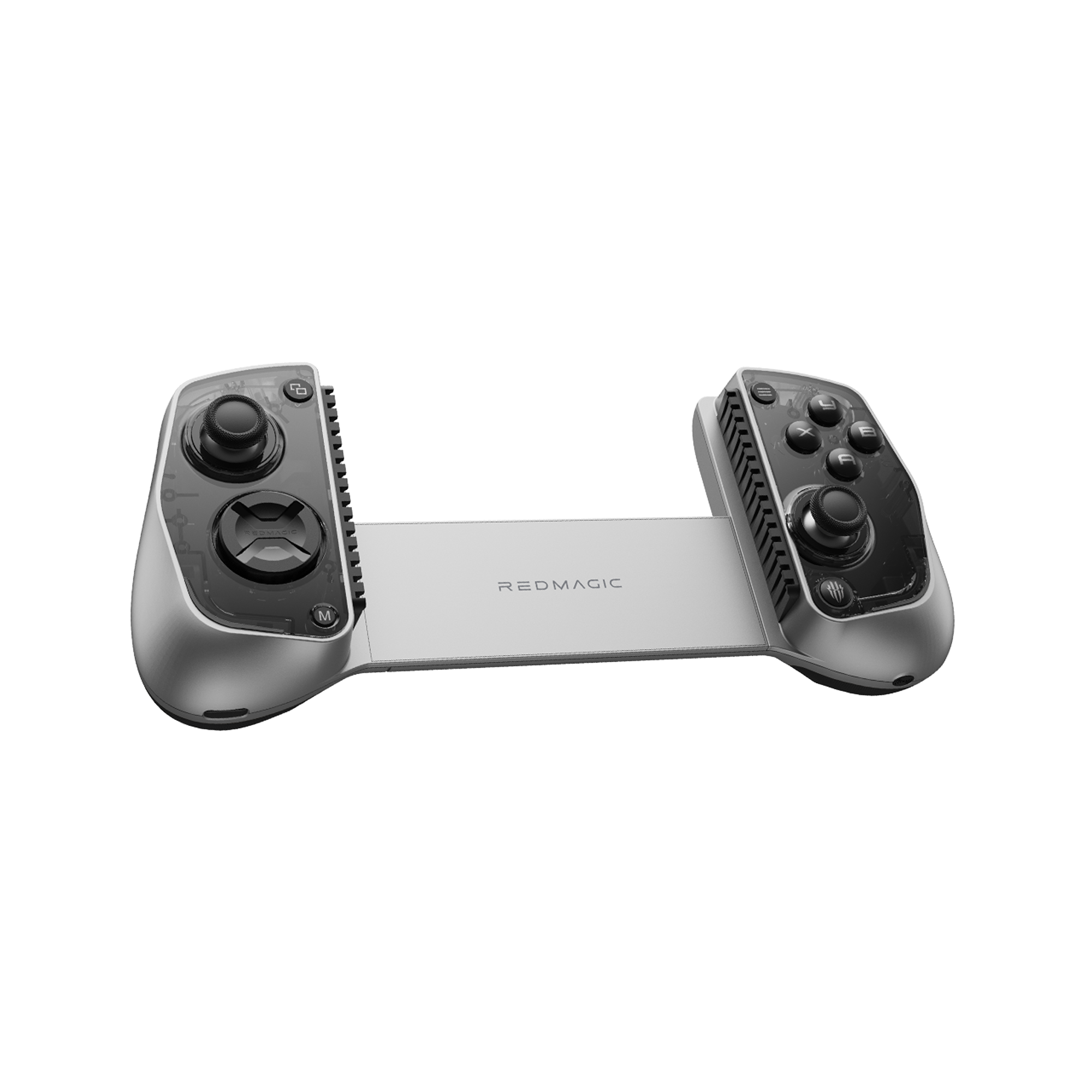

REDMAGIC Shadow Blade Gamepad 3
REDMAGIC Shadow Blade Gamepad 3 – Lightweight, RGB Lighting, Pro-Level Mobile Controller
Experience console-style gaming anywhere with the REDMAGIC Shadow Blade Gamepad 3. Featuring customizable RGB lighting, 6-axis gyroscope, Hall joysticks, and Bluetooth 5.3 compatibility for phones and tablets.
- Prix habituel
- À partir de €124.00
- Prix de vente
- À partir de €124.00
- Prix habituel
-
€129.00 - Prix unitaire
- par